Thursday, September 28, 2017

Build a Better Bibliography with RefWorks

Creating a bibliography or references page for your research papers can often be time-consuming.  The library subscribes to RefWorks, an online citation manager, which can make the process easier!

Some of the things you can do in RefWorks:

  • Import references from library databases and Google Scholar
  • Organize your references into folders by class or research topic
  • Create quick citations or bibliographies in any of the major citation styles (APA, MLA, Chicago, etc.)
  • Share your references with classmates or colleagues
  • Create in-text citations easily in Microsoft Word or Google Docs
To get started, visit RefWorks and create a username and password with your Nazareth email.

Here are some tips to make the most of RefWorks:


Importing References from Primo

The easiest way to add references to your RefWorks account is through a database.  For example, to send references from Primo (a library database) to RefWorks, click on the three dots next to a reference.


Then, select Export to RefWorks.


Your RefWorks account will open up in another tab.

You can also add references from Google Scholar.


Organize References into Folders

To organize references, click on the Folder icon.


Organizing references makes it easier to create bibliographies for a particular project.


Creating a Bibliography


Navigate to the folder you want to use and click the Create bibliography icon.


Next, search for your output style and select it.  Your formatted bibliography will appear in your browser for you to copy & paste.  Always double-check the accuracy of the bibliography, using the style handbook or helpful websites like OWL at Purdue.

This is only a short introduction to the things you can do in RefWorks.  You can find more instructions and help on the RefWorks help page.

If you have any questions about using RefWorks, or exploring other citation managers, contact Ilka at idatig5@naz.edu.  Happy citing!

Friday, September 15, 2017

Right to Write: NYS Constitutional Convention 2017 (September 27)

The library, in conjunction with the Political Science Department, the Writing Center, and the Center for Civic Engagement, will be holding another Right to Write event on September 27 from Noon-5 pm in the Writing Center.

This time our focus is on raising awareness for the upcoming vote on November 7, 2017, regarding the Constitutional Convention.  At the ballot, New Yorkers will be asked to vote "Yes" or "No" to holding a Constitutional Convention.


Every 20 years, New York residents have the right to vote on whether or not to hold a Constitutional Convention to rewrite our state’s constitution. In advance of this year’s referendum, we will be holding a Right to Write session in the Writing Center to garner awareness about this crucial vote. During the session, students will have the opportunity to learn more about the pros and cons of having a constitutional convention —should we break up New York state? Should we change New York labor laws? Should New York guarantee access to healthcare? We will also be registering students to vote, making posters, eating pizza, and writing our representatives to endorse or oppose the convention.

You can find more information about the Constitutional Convention vote on our Research Guide for Right to Write.  We hope to see you there!

Friday, September 1, 2017

Nazareth College History: A Peek Into the Archives

Welcome to a new year at Nazareth College! If you’re new to campus, be sure to check out the Archives page on the library’s website. There you’ll find a brief history of the college which might fill in some details not covered in a campus tour. Nazareth College has a proud heritage spanning 93 years of educational excellence - and a home away from home for students from near and far.


The Gleaner, available online from 1926 to 2007, was the college newspaper published by and for students, and provides a wonderful glimpse into college life over the years. By reading The Gleaner you can see what was important to students at various times in our history, and learn how they reacted to issues important to them.

In the 1960’s a number of Nazareth students responded to the call to join President Kennedy’s Peace Corps.  We have some wonderful letters in the archives written by volunteers from overseas.


The Gleaner also documents how students perceived the Vietnam War, national elections, and other events over the years.  On a lighter note, they also wondered if the library was open late enough!


The Gleaner also offers glimpses of historical fashion: a Nazareth coed even made national news when chosen as one of the nation’s best dressed in 1963!


So if you have a moment, check out The Gleaner. Having such a resource really does give us a chance to peek into past college life, which in many ways was not so different from ours.

If you have any questions, or would like to see The Gleaner and other archival materials in person, please let us know!

Thursday, August 24, 2017

Welcome to Naz!

We are so excited to welcome all the new students arriving on campus this week!


We are at the Naz Services Expo in the Arts Center until 2 pm today (August 24), so come say Hi!


We have some fun giveaways!  

Come guess how many M&Ms are in the jar (Hint:  It's the number of NazFlix DVDs checked out last year) and win the M&Ms and the jar!


Like us on Facebook or Instagram and automatically be entered into a raffle to win one of the brand new books that we picked up over the summer--some aren't even available for sale yet!


Tomorrow (August 25) is our Open House--from 9-1045 in the morning we'll be offering tours.  We will have lots of information about how to make the most of the library.  Plus Barkley the Therapy Dog will be here!


We hope to see you soon, and welcome to Naz!

Friday, August 11, 2017

An introduction to demonstrating scholarly impact

*** In our Faculty/Staff user survey in Spring 2017 our respondents requested information on vanity publishers and scholarly impact.  This is our first step in sharing what we know about this topic.  Feel free to contact us for more information! ***

Measuring scholarly impact is a complex process, including both qualitative and quantitative factors.  Some of the essential pieces include:
  • identifying high-impact publishers, 
  • avoiding predatory/vanity publishers, 
  • crafting your online scholarly presence, and 
  • understanding the ever-evolving world of alternative metrics (altmetrics).  
Picking the right publisher

This video from Think.Check.Submit offers advice on choosing trusted journals to publish your research.


If you are interested in publishing in the highest ranking journals, Scimago Journal Rankings are helpful.  Another option is Eigenfactor.org, which uses an alternative algorithm to rank journals.

If you're looking at open access publishing, the Directory of Open Access Journals is reputable.  DOAJ reviews contents to make sure that publishers meet their criteria for inclusion, and sometimes removes publishers that are not making the grade.

Here is a list of potential, possible, or probable predatory scholarly open-access journals.  Some common characteristics of low-quality vanity publishers are:
  • publication of low quality material
  • a business model in which the author pays the publisher
  • mass e-mails to academics in unrelated fields
  • very general calls for publication, including both subject area and type of content
  • grammar and spelling errors in email or other communications and in the journal itself
Crafting your online scholarly presence

Taking a look, and making improvements when necessary, in how your work is represented online can be very influential in increasing your scholarly impact.  Here are some helpful links for managing your presence on social media:
Understanding metrics

Traditionally, scholarly metrics (bibliometrics) focused on publishing in academic journals.  Places like Google Scholar can help you get citation metrics that demonstrate the impact of your work in most journals, books and book chapters, dissertations, and conference proceedings.

Due to the ever-changing world of scholarly publishing, researchers have looked for new ways to measure their output in non-traditional avenues, such as blogs and social media.  Altmetrics are different ways of measuring the impact and usage of scholarship.  Some examples include:
  • social media sharing
  • library holdings
  • citations in blogs and wikis, 
  • views and downloads in online repositories (source)
You can find more information at these links:
Please contact the library if you have comments or questions!

Friday, July 28, 2017

New additions to our political and Middle Eastern collections

This year the library has been happy to receive multiple donations from Professor Carl Max Kortepeter, including titles from his extensive collection of Middle Eastern and political histories.  Some of his donations include:

Keeping the tablets : modern American conservative thought / edited by William F. Buckley, Jr. and Charles R. Kesler

Neither East nor West : Iran, the Soviet Union, and the United States / edited by Nikki R. Keddie and Mark J. Gasiorowski

Trade and traders in Muslim Spain : the commercial realignment of the Iberian peninsula, 900-1500 / Olivia Remie Constable.

A Thousand Days:  John F. Kennedy in the White House / Arthur Schlesinger Jr.


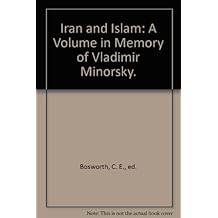
Iran and Islam: in memory of the late Vladimir Minorsky / C.E. Bosworth editor.

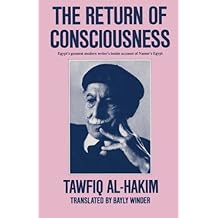
The return of consciousness / by Tawfiq Al-Hakim ; translated from the Arabic by Bayly Winder.

The selected writings of Eqbal Ahmad / edited by Carollee Bengelsdorf, Margaret Cerullo, and Yogesh Chandrani ; foreword by Noam Chomsky.

Product DetailsProduct Details

He has also recently donated his newest book, 12 Muslim Revolutions, and the Struggle for Legitimacy Against the Imperial Powers.  Kortepeter has long been a respected scholar in the field of Middle Eastern studies and political history.  Here is a short biography from his most recent publisher:

"An avid traveller with a gift for foreign languages, Professor Max Kortepeter spent decades studying and teaching about the Middle East. He taught at New York University for three decades and held faculty appointments at the University of Toronto and Princeton University. He has lectured around the world, often in his adopted languages. Other works written or edited by Kortepeter include: Ottoman Imperialism During the Reformation; The Ottoman Turks: Nomad Kingdom to World Empire; Atatürk and the Transformation of Turkish Culture; Oil and Economic Geography in the Middle East; The Modern Middle East: Literature and Society; and The Human Experience, a popular world history text.

Professor Kortepeter holds a B.A. in American Studies from Harvard University, an M.A. in Islamic Studies from McGill University, and a Ph.D. in Middle East History from the School of Oriental and African Studies, University of London."

You can find more of his published work by searching for Carl Max Kortepeter in Primo.

Friday, July 14, 2017

Doing some academic writing this summer?

The library recently purchased a number of books on academic writing and productivity.  Here are some highlights!

Silvia, P. (2007). How to write a lot : A practical guide to productive academic writing (1st ed.). 

Goodson, P. (2017). Becoming an academic writer : 50 exercises for paced, productive, and powerful writing (Second ed.).

Silvia, P. (2015). Write it up : Practical strategies for writing and publishing journal articles.


You can find more in Primo, which has replaced our old library catalog.  If you want print books, make sure to limit your search to 'books" (under Resource Type) and "available in the library".


Let us know if you have any questions!