Thursday, December 7, 2017

Two Hundred Years on the Erie Canal, 1817-2017

The library is currently hosting a traveling exhibit on the history of the Erie Canal, from now until December 22, 2017.  The exhibit is located in the Browsing Lounge, on the main floor near the entrance of the library.


The exhibit, titled "Two Hundred Years on the Erie Canal, 1817-2017" celebrates the 200th anniversary of the groundbreaking of the Erie Canal.


The archival images in the exhibit come from the New York Heritage Digital Collections and the Digital Public Library of America.  The exhibit itself comes from the Rochester Regional Library Council and has been traveling to different libraries across the state throughout this year.

We have supplemented the exhibit with some related materials from our own collections.  Time also published some 'surprising facts' about the Erie Canal that are fun to read.  You can also visit the Canal Society of New York State online collections via the New York Heritage site.


As a bonus, we've also collected some children's books related to the Erie Canal and are displaying them near the children's room.

We hope you enjoy the exhibit!

Thursday, November 30, 2017

The Archives: A Student's View

The Nazareth Library archives offer researchers a space for study and a safe environment to store valuable artifacts for future generations. The collections include catalogs, department and college newsletters, The Gleaner, hundreds of photographs, memorabilia, newspaper clippings and much more. We are excited to be able to share the history of Nazareth College, and look forward to assisting in any way we can.


Recently, one of our library student assistants wrote up a description of the Archives and how they've played a role in her academic work here at Naz:

From Dana Teets, Museums, Archives, Public History & Legal Studies Major

"Did you know that Nazareth has a Museums, Archives and Public History major? Well, now you do. I was the first person to declare that major here at Nazareth and I have done a couple of cool things since declaring it. One being, helping Deborah Janetos down in the college archives in the basement of the Lorette Wilmot Library.


The archives hold old school records, photos, department t-shirts, old banners, posters, diploma cases, alumni memorabilia that was donated, etc. I focused mostly on the oversized boxes that needed to be cataloged and organized.
 

While this experience may sound boring to some, it is actually quite enriching when you’re going into the field that I am. I encourage anyone who wants to have a future in museums, archives or public history to seek out any opportunity that they can! Any experience is good experience; you learn from it all whether it be good or bad."


For more information about the Archives, contact Deborah Janetos, our Archivist.  

Thursday, November 16, 2017

New additions to our Art & Art History collections!

The library recently received a large donation of art and art history books from the estate of Thomas Frey.  His collection has greatly expanded our collections in Renaissance art and 19th Century art (including many books on Van Gogh), as well as ancient and modern art.

The Vincent Van Gogh atlas / Nienke Denekamp & René van Blerk with Teio Meedendorp ; translated by Laura Watkinson. Picasso : the Great War, experimentation, and change / edited by Mariah Keller ; with essays by Simonetta Fraquelli, Kenneth E. Silver, Elizabeth Cowling and Dominique H. Vasseur. Valentin de Boulogne : beyond Caravaggio / Annick Lemoine and Keith Christiansen ; with contributions by Patrizia Cavazzini, Jean-Pierre Cuzin, and Gianni Papi.

Mr. Frey was a Monroe County executive and an avid art enthusiast.  He often traveled to art exhibits and collected exhibition catalogs, which are a sizeable portion of the donations he made to our library.

The Metropolitan Museum of Art : masterpiece paintings / Kathryn Calley Galitz ; foreword by Thomas P. Campbell.  Ancient Egypt transformed : the Middle Kingdom / edited by Adela Oppenheim, Dorothea Arnold, Dieter Arnold, and Kei Yamamoto. Della Robbia : sculpting with color in Renaissance Florence / Marietta Cambareri, with contributions by Abigail Hykin and Courtney Leigh Harris.

Mr. Frey generously donated his entire collection to our library, in hopes that these books would be used and appreciated by the excellent visual and performing arts students, as well as the rest of our scholarly community at Nazareth.

Design for eternity : architectural models from the ancient Americas / Joanne Pillsbury, Patricia Joan Sarro, James Doyle, Juliet Wiersema. Russian modernism : cross-currents of German and Russian art, 1907-1917 / edited by Konstantin Akinsha ; with preface by Ronald S. Lauder, foreword by Renée Price, and essays by Konstantin Akinsha, Vivian Endicott Barnett, Natalia Murray, Irina Romanova, Jane Sharp, and Aleksandra Shatskikh.

Mr. Frey's obituary from the Rochester Democrat & Chronicle is available here.

Friday, October 20, 2017

Database Trial: Sage Research Methods

Our library is currently conducting a trial of SAGE Research Methods, a platform designed to support the teaching and learning of research methodology at all levels, step by step.

We have access through November 10, 2017, at this link: http://methods.sagepub.com/.


PUBLISHER DESCRIPTION:

SAGE Research methods has a wide array of tools and materials to support research and teaching, by providing not only more than 800 reference works, books and journals, but also interactive tools such as methods lists and the methods map.

What is SAGE Research Methods?

For Student Research:

• Over 220,000 pages of content covering hundreds of methodological approaches help students at every step of their project
• Concise author videos answer basic questions like “How do I choose between different research methods?” and “What do you mean by the term‘ethnography’?”

For Faculty Research:

• Offers critical support in learning new techniques and methods
• Provides crucial resources to help faculty write up their methodology for publication in the best research journals
• Provides in-depth understanding of advanced methods and includes online access to the complete Quantitative Applications in the Social Sciences (QASS) series, also known as “The Little Green Books,” as well as the Qualitative Research Methods Series (QRMS), or “The Little Blue Books” Teaching Research Methods
• Perfect complement to coursework and traditional textbooks in research methods courses for Business, Communications, Criminology, Education, Health Sciences, Psychology, Political Science, Social Work and Sociology
• Sample assignments help students easily connect to concepts
• Aids faculty who oversee research papers and theses requiring original research

More information is available on the SAGE Research Methods guide or in their brochure.

You can try a search below.  Please note that the trial is only available on campus.  If you have any questions, please contact the Reference Department.  Let us know what you think!

Friday, October 13, 2017

New Database Feature: Save PDFs Directly to Google Drive

In any EBSCOhost library database, you now have the option to save the PDF Full Text of an article directly to your Google Drive.  Our EBSCOhost databases include:
To save an article to your Google Drive:

From the article detail page click the Google Drive icon in the tools menu on the right.


If you are not logged into your Google Drive account, you will be prompted to do so.

Note: Google authentication opens in a new window. If your browser is set to block pop-up windows, you may need to allow your browser to open a new window in order to log in.

Click Allow to authorize EBSCO to view and manage files in your Google Drive.


Click OK to close the Google Drive panel after it has indicated that your article has been saved.


Your articles are saved to Google Drive in an "EBSCO" folder.


This is a great new way of saving articles efficiently.  Please contact the Reference Department if you have any questions.

Thursday, September 28, 2017

Build a Better Bibliography with RefWorks

Creating a bibliography or references page for your research papers can often be time-consuming.  The library subscribes to RefWorks, an online citation manager, which can make the process easier!

Some of the things you can do in RefWorks:

  • Import references from library databases and Google Scholar
  • Organize your references into folders by class or research topic
  • Create quick citations or bibliographies in any of the major citation styles (APA, MLA, Chicago, etc.)
  • Share your references with classmates or colleagues
  • Create in-text citations easily in Microsoft Word or Google Docs
To get started, visit RefWorks and create a username and password with your Nazareth email.

Here are some tips to make the most of RefWorks:


Importing References from Primo

The easiest way to add references to your RefWorks account is through a database.  For example, to send references from Primo (a library database) to RefWorks, click on the three dots next to a reference.


Then, select Export to RefWorks.


Your RefWorks account will open up in another tab.

You can also add references from Google Scholar.


Organize References into Folders

To organize references, click on the Folder icon.


Organizing references makes it easier to create bibliographies for a particular project.


Creating a Bibliography


Navigate to the folder you want to use and click the Create bibliography icon.


Next, search for your output style and select it.  Your formatted bibliography will appear in your browser for you to copy & paste.  Always double-check the accuracy of the bibliography, using the style handbook or helpful websites like OWL at Purdue.

This is only a short introduction to the things you can do in RefWorks.  You can find more instructions and help on the RefWorks help page.

If you have any questions about using RefWorks, or exploring other citation managers, contact Ilka at idatig5@naz.edu.  Happy citing!

Friday, September 15, 2017

Right to Write: NYS Constitutional Convention 2017 (September 27)

The library, in conjunction with the Political Science Department, the Writing Center, and the Center for Civic Engagement, will be holding another Right to Write event on September 27 from Noon-5 pm in the Writing Center.

This time our focus is on raising awareness for the upcoming vote on November 7, 2017, regarding the Constitutional Convention.  At the ballot, New Yorkers will be asked to vote "Yes" or "No" to holding a Constitutional Convention.


Every 20 years, New York residents have the right to vote on whether or not to hold a Constitutional Convention to rewrite our state’s constitution. In advance of this year’s referendum, we will be holding a Right to Write session in the Writing Center to garner awareness about this crucial vote. During the session, students will have the opportunity to learn more about the pros and cons of having a constitutional convention —should we break up New York state? Should we change New York labor laws? Should New York guarantee access to healthcare? We will also be registering students to vote, making posters, eating pizza, and writing our representatives to endorse or oppose the convention.

You can find more information about the Constitutional Convention vote on our Research Guide for Right to Write.  We hope to see you there!

Friday, September 1, 2017

Nazareth College History: A Peek Into the Archives

Welcome to a new year at Nazareth College! If you’re new to campus, be sure to check out the Archives page on the library’s website. There you’ll find a brief history of the college which might fill in some details not covered in a campus tour. Nazareth College has a proud heritage spanning 93 years of educational excellence - and a home away from home for students from near and far.


The Gleaner, available online from 1926 to 2007, was the college newspaper published by and for students, and provides a wonderful glimpse into college life over the years. By reading The Gleaner you can see what was important to students at various times in our history, and learn how they reacted to issues important to them.

In the 1960’s a number of Nazareth students responded to the call to join President Kennedy’s Peace Corps.  We have some wonderful letters in the archives written by volunteers from overseas.


The Gleaner also documents how students perceived the Vietnam War, national elections, and other events over the years.  On a lighter note, they also wondered if the library was open late enough!


The Gleaner also offers glimpses of historical fashion: a Nazareth coed even made national news when chosen as one of the nation’s best dressed in 1963!


So if you have a moment, check out The Gleaner. Having such a resource really does give us a chance to peek into past college life, which in many ways was not so different from ours.

If you have any questions, or would like to see The Gleaner and other archival materials in person, please let us know!

Thursday, August 24, 2017

Welcome to Naz!

We are so excited to welcome all the new students arriving on campus this week!

We are at the Naz Services Expo in the Arts Center until 2 pm today (August 24), so come say Hi!


We have some fun giveaways!  

Come guess how many M&Ms are in the jar (Hint:  It's the number of NazFlix DVDs checked out last year) and win the M&Ms and the jar!


Like us on Facebook or Instagram and automatically be entered into a raffle to win one of the brand new books that we picked up over the summer--some aren't even available for sale yet!


Tomorrow (August 25) is our Open House--from 9-1045 in the morning we'll be offering tours.  We will have lots of information about how to make the most of the library.  Plus Barkley the Therapy Dog will be here!


We hope to see you soon, and welcome to Naz!

Friday, August 11, 2017

An introduction to demonstrating scholarly impact

*** In our Faculty/Staff user survey in Spring 2017 our respondents requested information on vanity publishers and scholarly impact.  This is our first step in sharing what we know about this topic.  Feel free to contact us for more information! ***

Measuring scholarly impact is a complex process, including both qualitative and quantitative factors.  Some of the essential pieces include:
  • identifying high-impact publishers, 
  • avoiding predatory/vanity publishers, 
  • crafting your online scholarly presence, and 
  • understanding the ever-evolving world of alternative metrics (altmetrics).  
Picking the right publisher

This video from Think.Check.Submit offers advice on choosing trusted journals to publish your research.


If you are interested in publishing in the highest ranking journals, Scimago Journal Rankings are helpful.  Another option is Eigenfactor.org, which uses an alternative algorithm to rank journals.

If you're looking at open access publishing, the Directory of Open Access Journals is reputable.  DOAJ reviews contents to make sure that publishers meet their criteria for inclusion, and sometimes removes publishers that are not making the grade.

Here is a list of potential, possible, or probable predatory scholarly open-access journals.  Some common characteristics of low-quality vanity publishers are:
  • publication of low quality material
  • a business model in which the author pays the publisher
  • mass e-mails to academics in unrelated fields
  • very general calls for publication, including both subject area and type of content
  • grammar and spelling errors in email or other communications and in the journal itself
Crafting your online scholarly presence

Taking a look, and making improvements when necessary, in how your work is represented online can be very influential in increasing your scholarly impact.  Here are some helpful links for managing your presence on social media:
Understanding metrics

Traditionally, scholarly metrics (bibliometrics) focused on publishing in academic journals.  Places like Google Scholar can help you get citation metrics that demonstrate the impact of your work in most journals, books and book chapters, dissertations, and conference proceedings.

Due to the ever-changing world of scholarly publishing, researchers have looked for new ways to measure their output in non-traditional avenues, such as blogs and social media.  Altmetrics are different ways of measuring the impact and usage of scholarship.  Some examples include:
  • social media sharing
  • library holdings
  • citations in blogs and wikis, 
  • views and downloads in online repositories (source)
You can find more information at these links:
Please contact the library if you have comments or questions!

Friday, July 28, 2017

New additions to our political and Middle Eastern collections

This year the library has been happy to receive multiple donations from Professor Carl Max Kortepeter, including titles from his extensive collection of Middle Eastern and political histories.  Some of his donations include:

Keeping the tablets : modern American conservative thought / edited by William F. Buckley, Jr. and Charles R. Kesler

Neither East nor West : Iran, the Soviet Union, and the United States / edited by Nikki R. Keddie and Mark J. Gasiorowski

Trade and traders in Muslim Spain : the commercial realignment of the Iberian peninsula, 900-1500 / Olivia Remie Constable.

A Thousand Days:  John F. Kennedy in the White House / Arthur Schlesinger Jr.


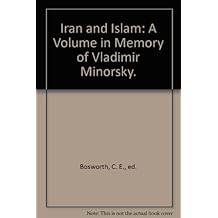
Iran and Islam: in memory of the late Vladimir Minorsky / C.E. Bosworth editor.

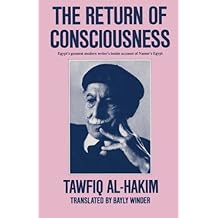
The return of consciousness / by Tawfiq Al-Hakim ; translated from the Arabic by Bayly Winder.

The selected writings of Eqbal Ahmad / edited by Carollee Bengelsdorf, Margaret Cerullo, and Yogesh Chandrani ; foreword by Noam Chomsky.

Product DetailsProduct Details

He has also recently donated his newest book, 12 Muslim Revolutions, and the Struggle for Legitimacy Against the Imperial Powers.  Kortepeter has long been a respected scholar in the field of Middle Eastern studies and political history.  Here is a short biography from his most recent publisher:

"An avid traveller with a gift for foreign languages, Professor Max Kortepeter spent decades studying and teaching about the Middle East. He taught at New York University for three decades and held faculty appointments at the University of Toronto and Princeton University. He has lectured around the world, often in his adopted languages. Other works written or edited by Kortepeter include: Ottoman Imperialism During the Reformation; The Ottoman Turks: Nomad Kingdom to World Empire; Atatürk and the Transformation of Turkish Culture; Oil and Economic Geography in the Middle East; The Modern Middle East: Literature and Society; and The Human Experience, a popular world history text.

Professor Kortepeter holds a B.A. in American Studies from Harvard University, an M.A. in Islamic Studies from McGill University, and a Ph.D. in Middle East History from the School of Oriental and African Studies, University of London."

You can find more of his published work by searching for Carl Max Kortepeter in Primo.

Friday, July 14, 2017

Doing some academic writing this summer?

The library recently purchased a number of books on academic writing and productivity.  Here are some highlights!

Silvia, P. (2007). How to write a lot : A practical guide to productive academic writing (1st ed.). 

Goodson, P. (2017). Becoming an academic writer : 50 exercises for paced, productive, and powerful writing (Second ed.).

Silvia, P. (2015). Write it up : Practical strategies for writing and publishing journal articles.


You can find more in Primo, which has replaced our old library catalog.  If you want print books, make sure to limit your search to 'books" (under Resource Type) and "available in the library".


Let us know if you have any questions!

Wednesday, June 28, 2017

Primo: Our New Library System


Primo is a new powerful single search box which allows you to search for books, ebooks, journal articles, and more in the Nazareth Library collections and beyond!


Essentially, Primo allows you to search the old library catalog (print books, journals and media holdings within the library) in conjunction with all of our databases (such as JSTOR, Academic Search Complete, and CINAHL).

Primo is designed to save time and increase productivity by combining all of our library resources into one search interface.

Primo has replaced EBSCO Discovery Service and the previous library catalog.

Primo incorporates a number of requests that we have had from faculty and students, including:
  • One search box for all library materials
  • NazNet ID and Password access--no more library barcodes!
  • Easier access to items from St. John Fisher College Library
                                
If you'd like to see some training materials on Primo, please visit our Help and Support page.

If you are experiencing difficulty with Primo, please contact the library at 585-389-2129 or answers.naz.edu